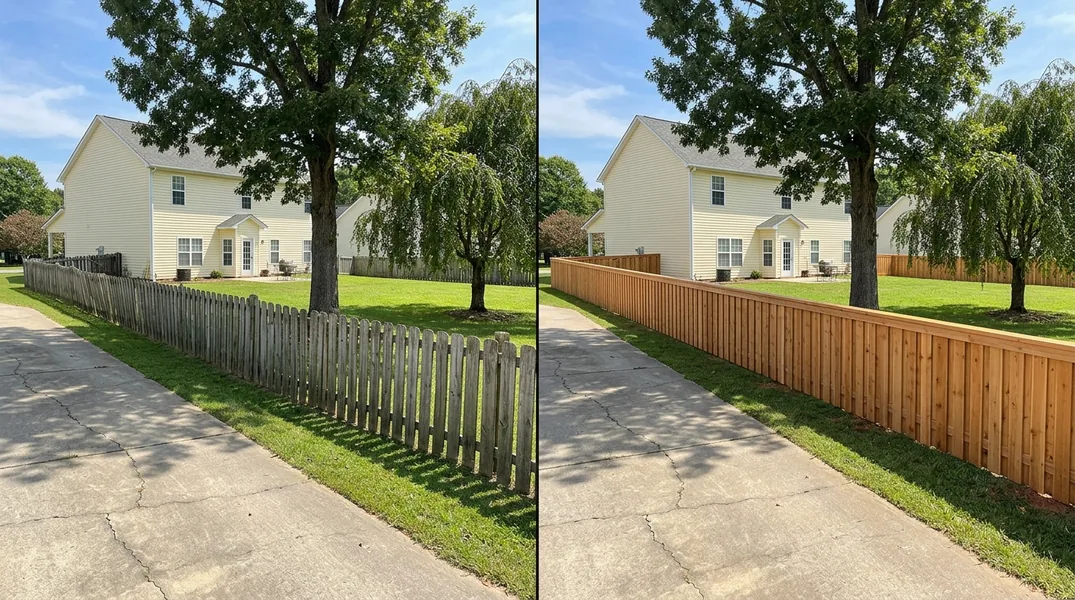
Understanding Greensboro's Climate and Fence Material Demands
Greensboro sits in the Piedmont region of North Carolina, where homeowners face a unique combination of weather challenges. The area experiences hot, humid summers, moderate winters, and significant rainfall throughout the year. These conditions put considerable stress on outdoor structures, making the choice between wood and vinyl fencing more than just an aesthetic decision. Your fence needs to withstand moisture, temperature fluctuations, and the occasional heavy storm without deteriorating rapidly.
When you're evaluating the best fence material for your property in Greensboro, understanding how each material responds to local climate conditions is essential. Wood and vinyl represent the two most popular options for residential privacy fencing, but they behave very differently under the specific pressures of North Carolina's Piedmont weather. This comparison will help you make an informed decision based on your priorities, budget, and long-term maintenance expectations.
Wood Fencing: Classic Appeal with Real Maintenance Demands
Wood & Privacy Fence Installation remains a popular choice for homeowners who value the natural aesthetic and warmth that only timber can provide. Wood fences offer a timeless look that complements virtually any home style, from traditional colonial properties to modern farmhouses. The material also provides excellent privacy when properly installed, with solid boards creating an impenetrable barrier between your yard and the outside world. Many homeowners in the region choose wood specifically for its natural beauty and the sense of permanence it brings to a property.
However, wood fencing in Greensboro's climate requires significant ongoing maintenance. The combination of humidity and rainfall means wood is constantly exposed to moisture, which leads to rot, warping, and swelling over time. You'll need to apply sealant or stain every two to three years to protect against these issues. Additionally, wood is vulnerable to insect damage, particularly termites, which thrive in North Carolina's warm, moist environment. Without regular inspection and treatment, a wood fence can develop serious structural problems within five to seven years. The natural beauty that makes wood appealing also demands that you stay committed to a regular maintenance schedule.
Vinyl Fencing: The Low Maintenance Alternative
Vinyl & PVC Fence Installation has emerged as the leading choice for homeowners seeking the best low maintenance fence option. Vinyl is engineered to resist moisture, rot, insects, and UV damage, making it ideally suited to Greensboro's humid climate. Unlike wood, vinyl doesn't require staining, sealing, or regular treatments. A simple occasional wash with soap and water is typically all the maintenance needed to keep your vinyl fence looking like new. This low-maintenance characteristic appeals to busy homeowners who want a beautiful fence without the ongoing time commitment.
The durability of vinyl in humid climates is one of its strongest selling points. Vinyl doesn't swell, warp, or rot when exposed to moisture, and it won't attract termites or other wood-boring insects. The material holds its color well and resists fading from the intense North Carolina sun. Most quality vinyl fencing comes with warranties ranging from 20 to 30 years, giving homeowners peace of mind about their investment. While vinyl fences may not have the exact natural appearance of wood, modern vinyl products have improved dramatically in appearance and now offer realistic wood-grain textures that many homeowners find attractive and satisfying.
Vinyl vs Wood Fence Cost: Initial Investment and Long-Term Value
When comparing vinyl vs wood fence cost, the initial investment typically favors wood. Wood fencing generally costs less upfront, with pricing that appeals to budget-conscious homeowners. However, this lower initial cost can be misleading when you factor in the total cost of ownership over 10, 15, or 20 years. Wood requires regular maintenance, repairs, and eventual replacement of damaged sections. These ongoing expenses add up significantly over time.
Vinyl fencing costs more initially, but the calculation changes dramatically when you consider the lifetime value. Because vinyl requires minimal maintenance, you avoid the recurring costs of sealants, stains, repairs, and replacements that wood demands. Over a 20-year period, many homeowners find that vinyl actually costs less when you account for labor and materials spent maintaining a wood fence. If you plan to stay in your home for many years, vinyl often represents the smarter financial investment despite the higher upfront cost. For homeowners who prioritize lower initial expenses and don't mind regular upkeep, wood may still be the right choice. The best material depends on your budget, timeline, and willingness to invest in maintenance.
Durability and Lifespan: What to Expect from Each Material
A properly maintained wood fence typically lasts 15 to 20 years in North Carolina's climate, though many homeowners experience problems much sooner if maintenance is neglected. Rot can begin appearing within 5 to 7 years if the fence isn't sealed and treated regularly. The wood's lifespan also depends on the species used; pressure-treated pine is more affordable but less durable than cedar or redwood. Even premium wood species require consistent care in Greensboro's humid environment. Once rot or termite damage becomes extensive, repairs become costly, and replacement of entire sections may be necessary.
Vinyl fencing, by contrast, typically lasts 25 to 30 years or more with minimal intervention. The material doesn't deteriorate from moisture, insects, or weather exposure in the way that wood does. Some vinyl fences installed 20 or 30 years ago are still performing well today. This extended lifespan means that while you pay more upfront for vinyl, you're making a one-time investment that will likely outlast the time you own your home. The predictability of vinyl's performance makes it an excellent choice for homeowners who want to install a fence and then forget about it, rather than managing ongoing maintenance concerns.
Making Your Choice: Wood & Privacy Fence Installation Near Me
Choosing between wood and vinyl ultimately depends on your personal priorities, aesthetic preferences, and lifestyle. If you love the natural look of wood and enjoy outdoor maintenance projects, or if you're working with a tight budget, wood fencing may be right for you. If you prioritize convenience, long-term value, and minimal upkeep, vinyl is likely the better choice. Consider how long you plan to stay in your home, your tolerance for regular maintenance, and whether you want to invest time and money in fence care over the years.
The team at Greensboro Fence Company can help you evaluate both options based on your specific needs and property conditions. We've installed both wood and vinyl fencing throughout Greensboro and understand how each material performs in our local climate. Whether you choose the classic beauty of wood or the practical durability of vinyl, proper installation is critical to ensuring your fence performs well for years to come. Contact us at (336) 962-6449 or request a free estimate to discuss which fencing solution works best for your home. We're here to help you make the right decision for your property.
Looking for a professional tree service in Greensboro? Greensboro Fence Company responds fast for all your fence needs.
Get a Free Quote